

How to Write a Killer Canadian Resume (2026 Guide)
A Canadian resume isn’t just a document it’s your personal marketing pitch. Whether you’re a newcomer to Canada or a seasoned professional aiming for your next big role, your resume needs to be clear, modern, and achievement‑driven.
This guide walks you through exactly how to write a killer Canadian resume that gets interviews.
⭐ Free Download: Canadian Resume Template (Word Format)
Want to skip the formatting and start filling in your details?
I’ve created a clean, modern, ATS‑friendly Canadian Resume Template you can download and customize instantly.
👉 Click here to download the free Canadian Resume Template (DOCX)
Perfect for newcomers, job seekers, and professionals who want a polished, recruiter‑ready resume.
Building a Strong Resume

🇨🇦 1. Understand the Canadian Resume Format
Canadian resumes follow a clean, simple, and professional structure. The standard expectations are:
-
1–2 pages
-
Reverse‑chronological format
-
No photo
-
No personal details (age, marital status, religion)
-
Clear headings and spacing
Recruiters skim resumes in 6–10 seconds, so clarity is everything.
Replace outdated “career objectives” with a 3–4 line summary that highlights:
-
Your profession
-
Years of experience
-
Key strengths
-
A major achievement
-
What you bring to the employer
Example:
Detail‑oriented Civil Engineering Technologist with 6+ years of experience supporting infrastructure and utilities projects across Canada. Skilled in drafting, field coordination, and quality control. Known for delivering accurate, high‑quality work under tight deadlines.
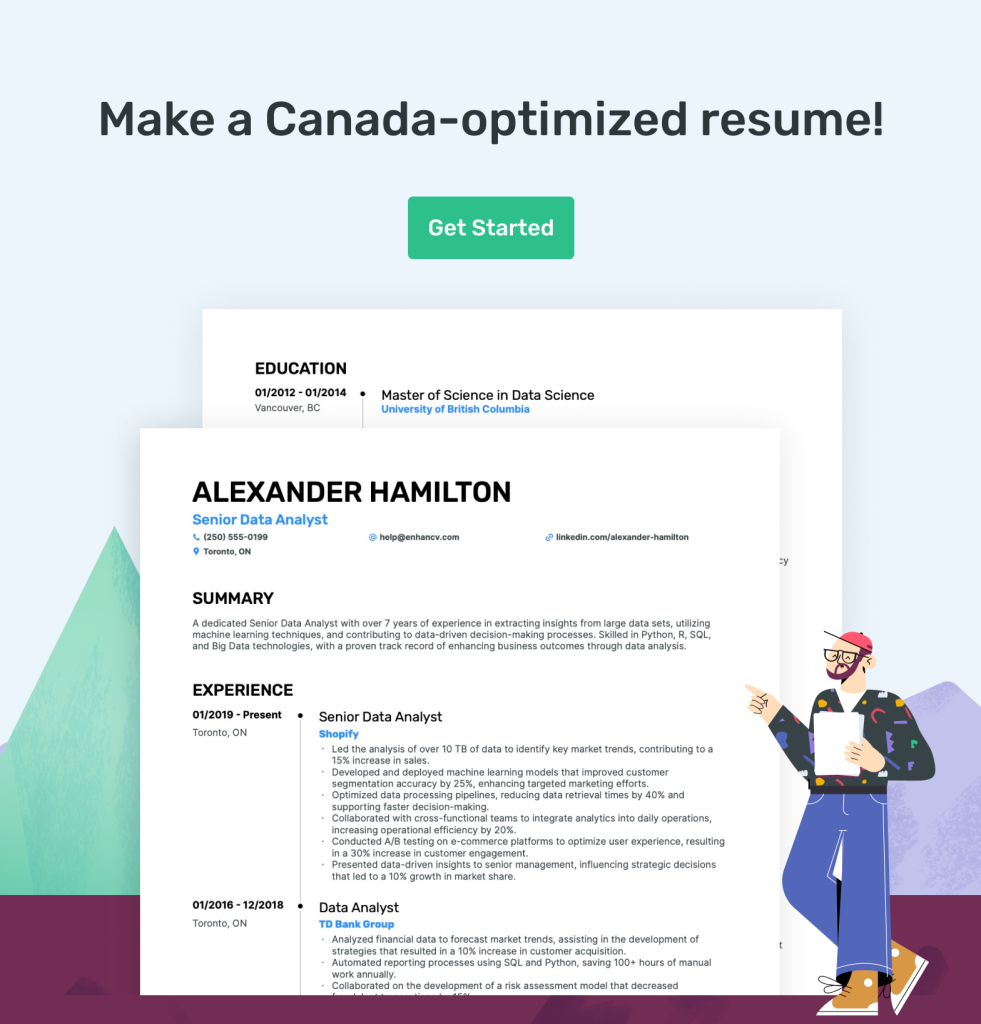
Most Canadian employers use Applicant Tracking Systems (ATS).
To pass the scan:
-
Use keywords from the job posting
-
Include both technical and soft skills
-
Keep the list relevant
Examples:
-
Project Coordination
-
Revit / AutoCAD
-
Cost Estimation
-
Stakeholder Communication
-
Risk Analysis
-
Technical Reporting
Canadian employers want results, not job descriptions.
Use the CAR method:
Challenge → Action → Result
And start each bullet with a strong verb.
Weak:
-
Responsible for managing project schedules
Killer:
-
Coordinated schedules for 10+ infrastructure projects, reducing delays by 15% through proactive planning
Aim for 3–5 bullets per role.
🎓 5. Include Education and Certifications
List:
-
Degrees
-
Diplomas
-
Professional certifications
-
Relevant training
Examples:
-
PMP
-
P.Eng / EIT
-
Autodesk Certified Professional
-
WHMIS / First Aid
If you’re a newcomer, add your credential assessment (WES, ICES, IQAS).
🌐 6. Add Optional Sections That Strengthen Your Profile
Depending on your field, you can include:
-
Volunteer experience
-
Technical projects
-
Languages
-
Awards
-
Publications
-
Professional memberships
These sections help you stand out — especially in Canada, where community involvement is valued.
A killer Canadian resume is:
-
Clean
-
Modern
-
Easy to skim
-
Free of long paragraphs
Use:
-
11–12 pt font
-
Simple fonts (Calibri, Arial, Helvetica)
-
Consistent spacing
-
Bullet points
-
PDF format when submitting
🚫 8. Avoid These Common Mistakes
Don’t include:
-
Photos
-
Salary expectations
-
References (write “Available upon request”)
-
Personal details
-
Long paragraphs
-
Generic statements
🎯 9. Tailor Your Resume for Every Job
This is the secret to a killer resume.
Customize:
-
Your summary
-
Your skills
-
Your achievements
-
Keywords
A tailored resume can increase your interview chances by 40–60%.
💡 10. Final Tips to Stand Out in Canada
-
Use Canadian spelling (organize → organise, center → centre)
-
Add metrics wherever possible
-
Keep it short and powerful
-
Make your LinkedIn profile match your resume
Conclusion
A killer Canadian resume is clear, concise, and achievement‑focused. It tells your story in a way that aligns with Canadian hiring expectations and positions you as the strongest candidate.
Don’t forget to grab your free template above — it’s designed to help you apply everything in this guide and build a resume that gets noticed.